English
 Precision housings and enclosures are decisive elements in product reliability. A well-machined housing holds electronics in exact positions, provides a stable thermal path, keeps out moisture and dust, and shields sensitive circuits from electromagnetic interference. The opposite is also true: a housing with poor flatness, excessive burrs, or uncontrolled tolerances can cause assembly failures and field returns. For engineering and procurement teams, the practical question is not whether to machine these parts, but how to specify them correctly and choose a shop that will deliver them consistently.
Content
- 1 What Counts as a Precision Housing or Enclosure?
- 2 CNC Machining vs. Other Enclosure Manufacturing Processes
- 3 Choosing the Right Material
- 4 Tolerances, Surface Finish, and Operating Environment
- 5 Design Guidelines for Machined Housings
- 6 Surface Finishing for Precision Enclosures
- 7 How Quality Control Prevents Enclosure Failures
- 8 Precision Housings in Real Applications
- 9 Final Recommendations
What Counts as a Precision Housing or Enclosure?
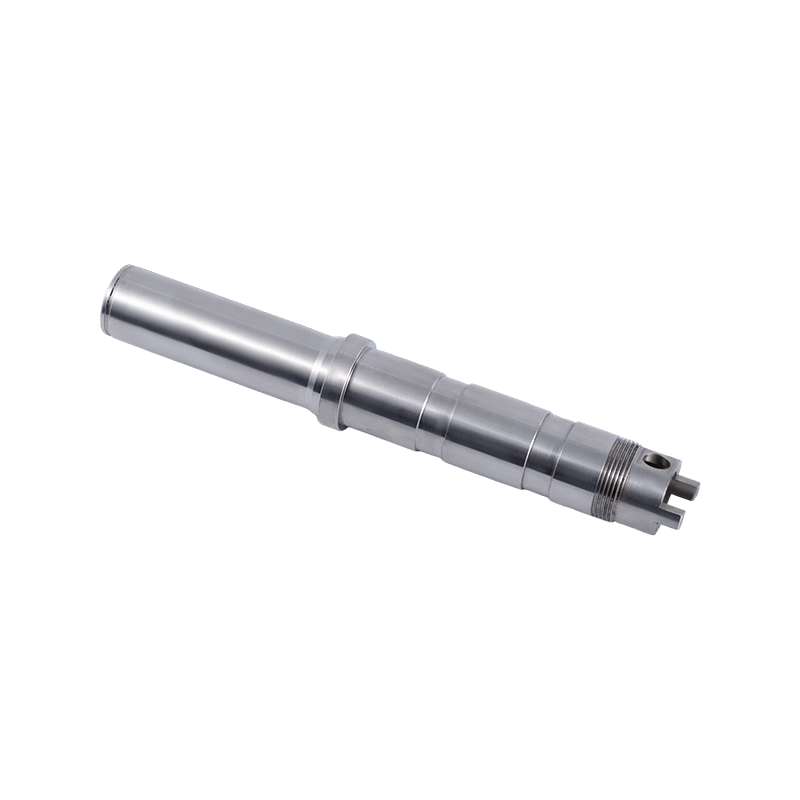
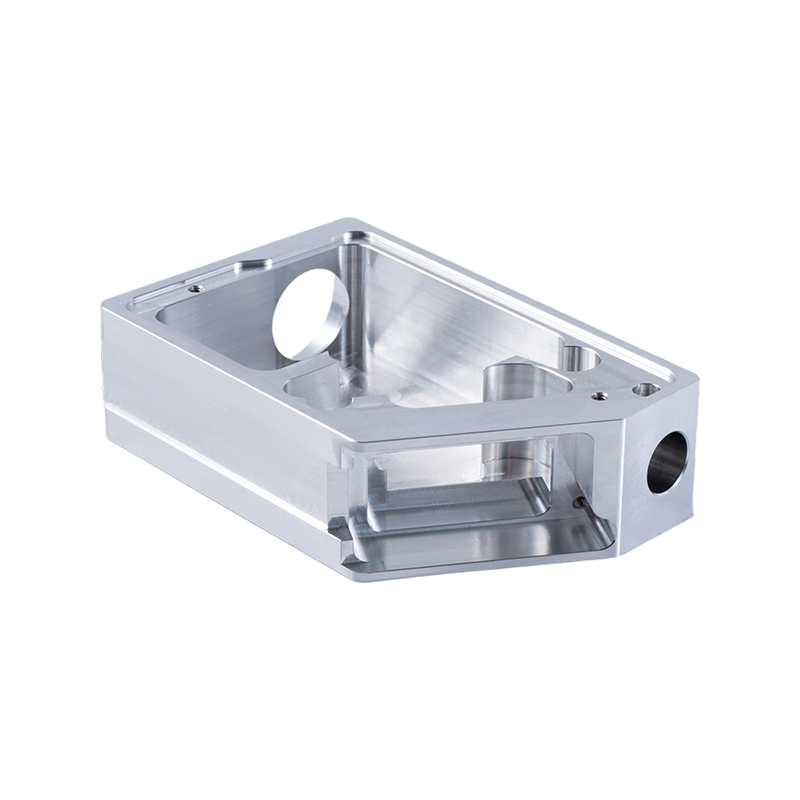
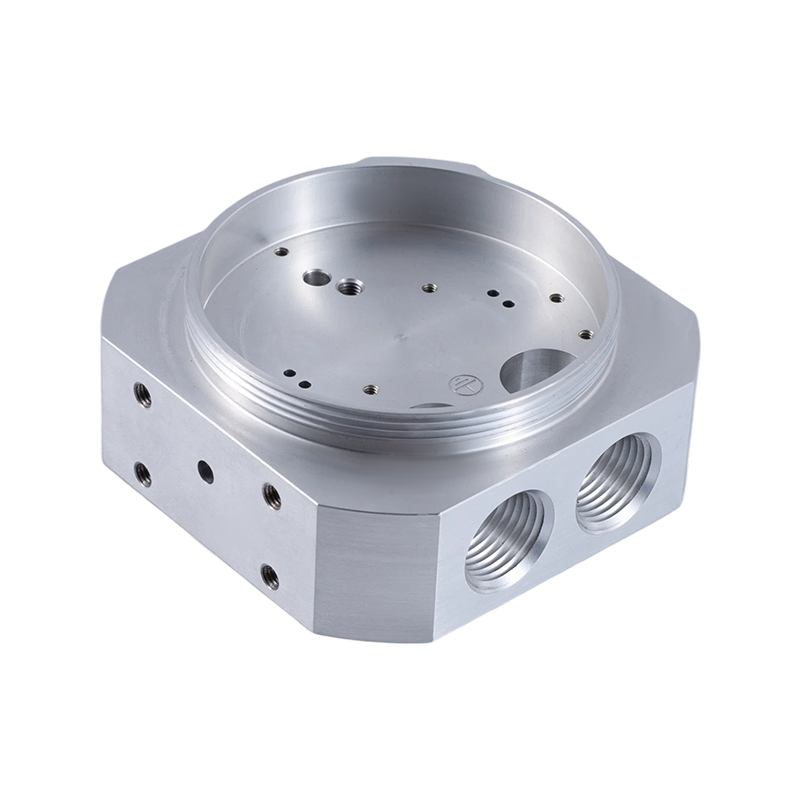
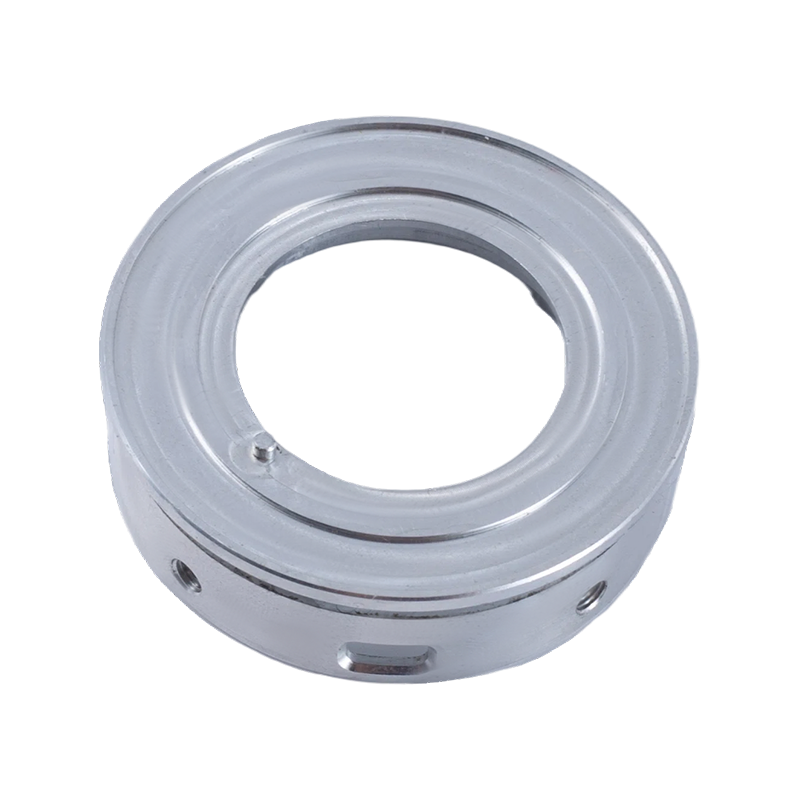
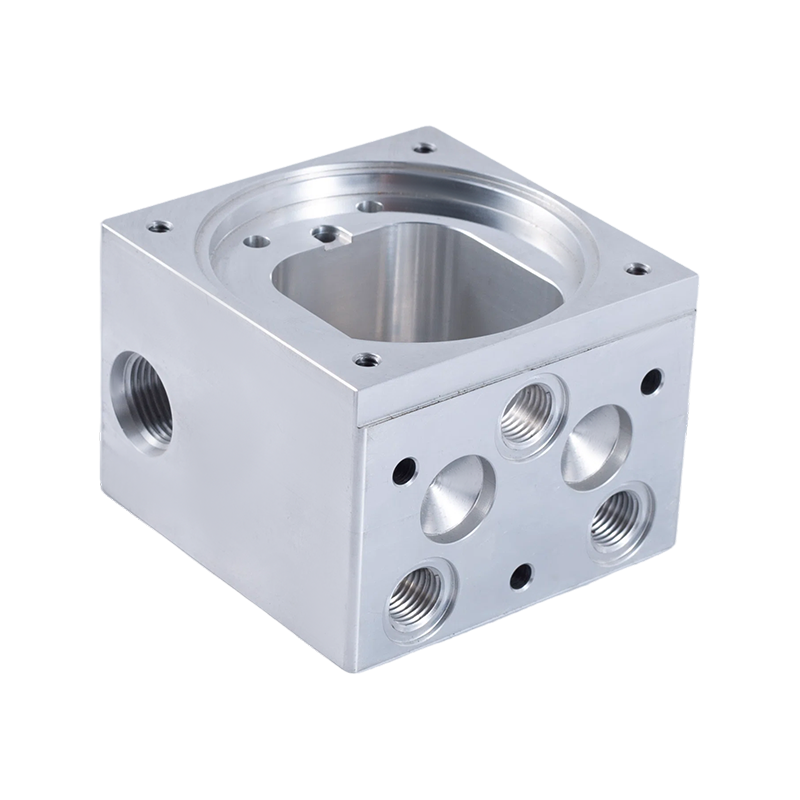
Precision housings and enclosures cover a broad family of CNC-milled components: electronic enclosures, controller boxes, sensor housings, connector bodies, battery housings, valve covers, front panels, baseplates, and modular mounting frames. In CNC milling, they are typically rectangular or block-shaped parts with multiple machined faces, internal pockets, drilled holes, tapped threads, and sealing surfaces.
Although the exterior of an enclosure may look simple, the value lies in internal details. A tight pocket for a circuit board, a controlled bore for a bearing or seal, threaded holes for connectors, and flat mounting faces must all stay within the tolerances defined on the drawing. These features decide how well the assembly performs in vibration, thermal cycling, and wet or dirty environments.
Common characteristics of precision-machined housings include:
- Controlled tolerances on pocket widths, bore diameters, and hole positions
- Flatness on gasket faces and mating surfaces
- Defined surface roughness on sealing areas
- Threaded holes or inserts for connector and cover fixation
- Provisions for heat dissipation and EMI/RFI shielding
CNC Machining vs. Other Enclosure Manufacturing Processes
CNC machining is usually the lowest-risk process when enclosure volumes are low or when the design requires tight tolerances and complex features. Die casting offers high repeatability after a mold exists, but tooling cost and lead time are high. Sheet metal fabrication suits simple boxes, but it often cannot provide the rigidity, flatness, and precision required for sealed or vibration-sensitive assemblies. Machining from solid metal gives the broadest control over dimensions, surface finish, and feature placement.
| Process | Typical Accuracy | Tooling Cost | Lead Time | Best Suited For |
|---|---|---|---|---|
| CNC Milling | ±0.01–0.05 mm | Low to moderate | Short to medium | Prototypes, small to medium batches, complex features |
| Die Casting | ±0.10 mm or better | High | Long mold development | High-volume, repetitive parts |
| Sheet Metal | ±0.2–0.5 mm | Low to moderate | Short | Simple boxes, brackets, low-precision shells |
For quantities from one prototype to a few thousand units, CNC milling offers the most predictable path from drawing to hardware. When volumes later justify a conversion to casting, the machined design provides useful data for wall thickness, draft angles, and expected shrinkage.
Choosing the Right Material
Material selection drives weight, heat dissipation, corrosion resistance, electromagnetic shielding, machinability, and cost. Aluminum alloys are the default for many precision housings because they balance these factors well. The most common aluminum grade for machined enclosures is 6061-T6, which offers good strength, easy machining, and a stable surface for anodizing.
| Material | Typical Uses | Advantages | Limitations |
|---|---|---|---|
| 6061-T6 Aluminum | Electronics, automation, telecom, automotive | Lightweight, good thermal conductivity, excellent machinability, anodizable | Lower strength than steel |
| 5052 Aluminum | Corrosion-sensitive enclosures, marine equipment | Excellent corrosion resistance, good formability | Lower machined strength than 6061-T6 |
| 304/316 Stainless Steel | Medical devices, food equipment, marine systems | High strength, corrosion resistance, durable surface | Heavy, harder to machine, higher cost |
| Brass or Copper | RF/EMI-sensitive housings, high-thermal applications | Best natural EMI shielding, high thermal conductivity | Heavy, expensive, can require special plating |
For most indoor industrial enclosures, 6061-T6 aluminum is the practical choice. If the enclosure will be repeatedly exposed to salt water or aggressive chemicals, 316 stainless steel is safer. When electromagnetic shielding is critical, copper or brass offers the best raw-shielding performance, but aluminum with an appropriate conductive finish can also meet many specifications.
Tolerances, Surface Finish, and Operating Environment
Tighter tolerances are not automatically better. They add machining time, inspection cost, and rejection risk. The goal is to specify the tolerance needed by the function and leave non-critical faces at general tolerances. A practical approach is to separate critical dimensions—bore diameters, hole positions, and gasket grooves—from cosmetic dimensions.
Typical CNC machining limits for precision housings are:
- General linear dimensions: ±0.10 mm
- Critical hole positions: ±0.05 mm
- Bores and sealing grooves: ±0.02 mm to 0.05 mm
- Flatness on a gasket face: 0.05 mm over a 100 mm span
- General surface roughness: Ra 3.2 µm
- Sealing faces: Ra 1.6 µm or better
- O-ring grooves: Ra 0.8 µm with no directional tool marks
The operating environment determines which limits matter. If the enclosure must meet IP67, the gasket groove must have controlled depth and a smooth finish; any scratch or spiral mark crossing the sealing face becomes a leak path. For EMI-sensitive equipment, mating surfaces need conductive continuity. Clear anodizing is electrically non-conductive, so the drawing should specify chemical film or a precisely masked anodizing process when shielding is required.
Design Guidelines for Machined Housings
A few simple design rules make a precision housing easier to machine and less likely to distort. These rules also help the shop quote more accurately and deliver faster.
- Keep internal corner radii as large as possible. Sharp corners require smaller tools, slower speeds, or additional EDM work.
- Maintain uniform wall thickness where practical. Large differences between thick and thin sections can create stress and machining distortion.
- Plan threaded holes with enough thread engagement, especially in aluminum. For fasteners that are frequently removed, consider threaded inserts.
- Add chamfers on tapped holes to reduce burrs and simplify assembly.
- Use standard O-ring groove dimensions rather than custom depths.
- Specify tight tolerances only on functional surfaces. Cosmetic locations can remain at general tolerance.
- Allow clearance for standard countersinks and counterbores so screw heads sit correctly.
Because machined housings often contain many drilled and tapped holes, the position of holes relative to each other is more important than the absolute position relative to the stock edge. Reference one corner or one datum plane in the drawing, and let the shop measure from that datums system for consistency.
Surface Finishing for Precision Enclosures
Surface finishing has two jobs: protect the material and produce the required electrical or sealing behavior. The most common finishes for aluminum enclosures are clear or black anodizing, chromate conversion coating, and powder coating. Anodizing creates a hard oxide layer that resists corrosion and wear, and it can be dyed for visual identification. Chromate conversion coating is thinner and electrically conductive, which makes it useful for EMI/RFI grounding.
Stainless steel housings are usually passivated to remove free iron from the surface. Electroless nickel plating is a good choice when the housing needs both wear resistance and a conductive surface. For high-frequency communication or precision measurement equipment, copper or silver plating may be specified for lower contact resistance.
When a finish is needed on specific faces only, the drawing should state which surfaces require masking. For example, an O-ring groove may need to remain uncoated if coating thickness would change the groove dimensions. This detail is often overlooked, but it has a direct effect on the final sealing performance.
How Quality Control Prevents Enclosure Failures
Most enclosure failures are not visible until final assembly or field use. That is why the inspection strategy should be defined before production begins. A reliable quality plan for machined housings includes first article inspection, verification of critical dimensions, surface finish checks, material certificates, and a dimensional report matched to the drawing.
Coordinate measuring machines are the standard method for verifying hole positions, pocket widths, and complex 3D profiles. Surface roughness testers confirm that sealing faces meet the specified Ra value. Air gauging is often used for tight bores and O-ring grooves because it detects small diameter variations reliably. If the enclosure will contain a gasket, flatness should be checked on the actual mounting face, not just inferred from overall dimensions.
For small-batch production, the same inspection method can be applied to every critical part. For larger batches, statistical process control on selected dimensions catches drift before parts go out of specification. A capable CNC shop will also perform in-process inspection, so the final report is not the first time the part has been measured.
Precision Housings in Real Applications
Precision housings and enclosures appear in nearly every piece of equipment that must survive industrial use. In new energy vehicles, motor controller housings and battery pack enclosures require tight tolerances for sealing and cooling channels. Medical devices rely on machined enclosures for instrument control panels and sensor housings because the parts must withstand repeated cleaning and sterilization.
Aerospace applications need lightweight housings with documented material traceability and strict dimensional control. 5G communication equipment uses RF enclosures and filter housings where conductivity and surface finish affect signal performance. Automation equipment depends on sensor housings, terminal boxes, and valve islands that mount reliably on production lines. Hydraulic and pneumatic systems use machined housings for valve bodies and solenoid covers where internal passage alignment must be exact.
What links these applications is the same set of requirements: stable dimensions, clean surfaces, repeatable assembly, and confidence in the supplier. A shop that understands both machining and module assembly can save weeks of coordination because pressed inserts, standoffs, and pre-assembled components can be handled internally.
Final Recommendations
Start with the operating environment, then choose the material, specify only the tolerances you truly need, and ask the machine shop to provide a measurement report. For low and medium volumes, CNC machining gives you the fastest path from drawing to tested hardware. For higher volumes, a machined enclosure can later be converted to a casting, but the initial machined design provides the data needed to make that transition smoothly.
At Suzhou Miao Cheng Precision Machinery, we produce precision housings and enclosures as part of our CNC milling services, and we combine them with component assembly when the application calls for it. The combination of machining, surface finishing, and modular assembly lets us manufacture parts that are ready for the next stage of production with fewer handovers and less risk.