

 English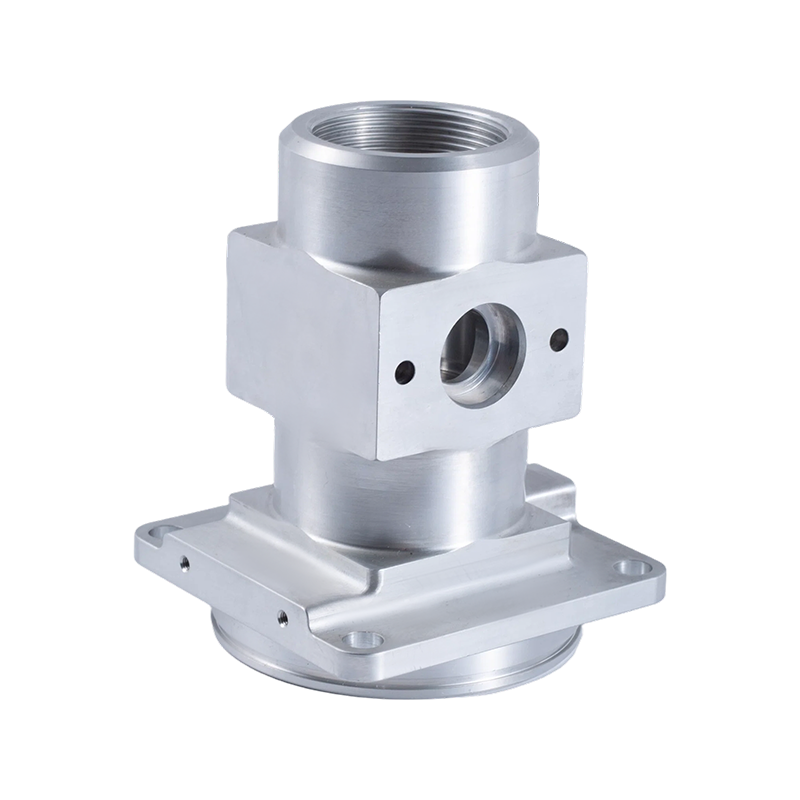
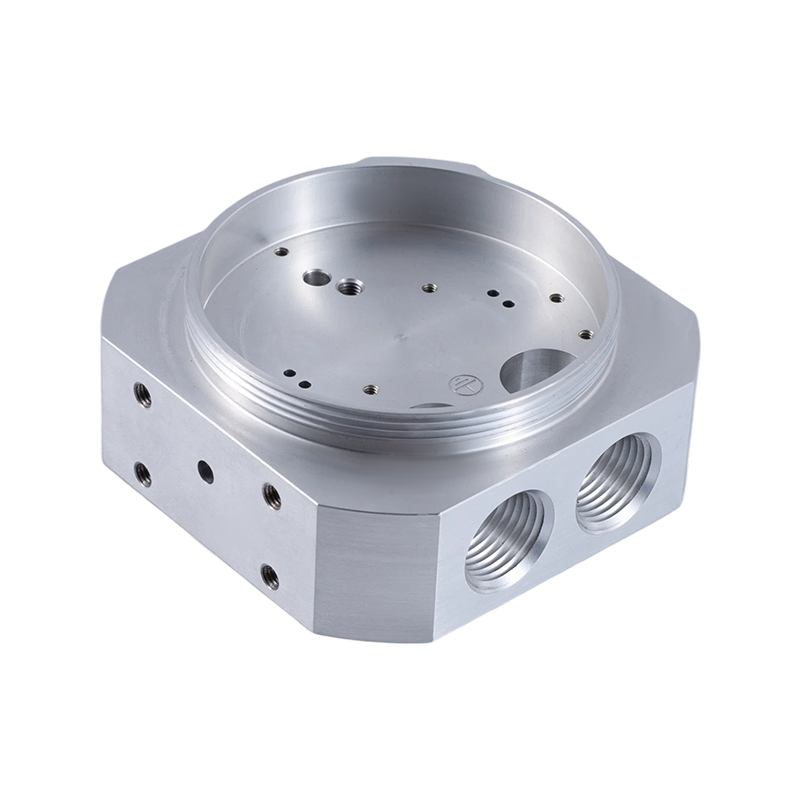
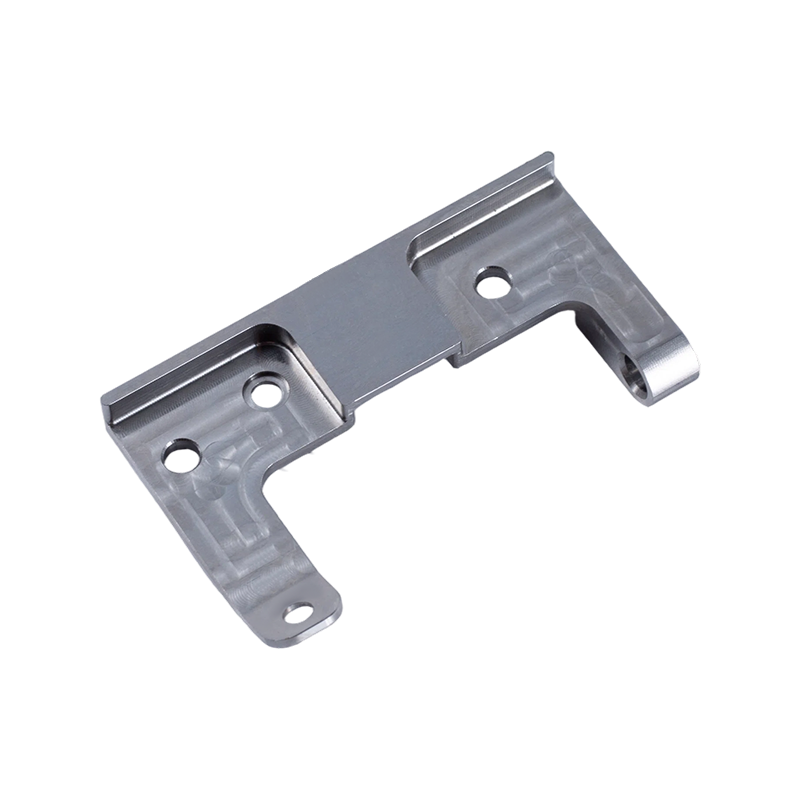


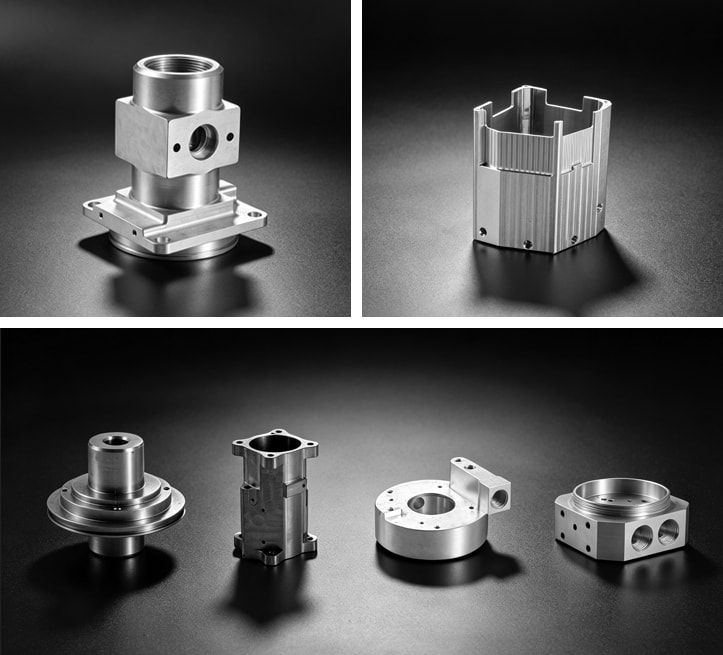
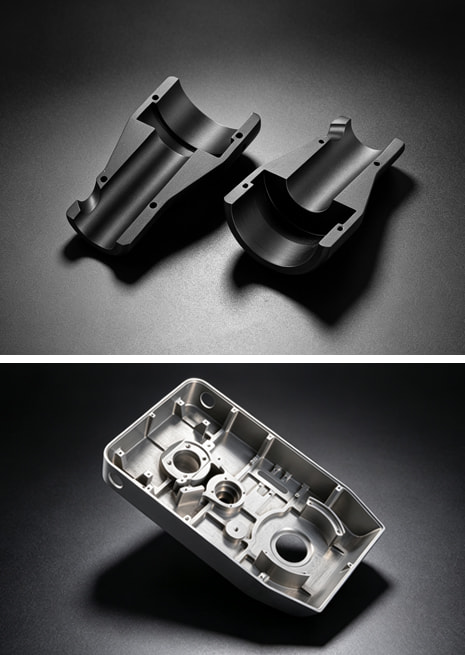
Automation equipment depends on machined components that can maintain alignment, seal pressure, carry load and locate sensors and actuators across thousands of operating cycles. As an Automation Equipment Accessories manufacturer based in Suzhou, China, we supply custom precision components for automated production lines, robotic cells, pneumatic and fluid control systems, semiconductor equipment and special-purpose machinery. Our manufacturing programme combines turning, milling, grinding, inspection and module assembly, so the accessory set can be matched to the full mechanical and functional scope of your machine.
This category covers non-standard parts that support the physical infrastructure of automation: components that guide motion, distribute air or fluid, house electronics, connect subassemblies, or mount tooling. If the part exists only in your drawing or sample, it belongs here.
Where Automation Equipment Accessories Fit
Automation Equipment Accessories is our category for application-specific components that keep automated machinery accurate, repeatable and ready for integration. They are rarely standard catalogue parts. Most are produced directly from a customer drawing, a supplied sample, or a 3D model with defined tolerances and material requirements.
Typical project examples include:
- Pneumatic and fluid control components such as precision valve bodies, manifolds and flow-control parts
- Rotary and linear motion components such as precision shafts, guide pins, bushings, sleeves and spacers
- Structural and interface parts such as housings, covers, brackets, mounting plates and sensor holders
- Connecting and sealing parts such as threaded joints, connectors, fittings and custom interfaces
- Tooling and fixture components for end-of-arm tooling, assembly stations and line changeover equipment
Because these components live inside a larger automated system, dimensional consistency from part to part is usually more important than a single perfect prototype. We treat the drawing, the operating environment and the assembly interface as one engineering problem. This category sits within Industry CNC Components, where our focus is on application-driven precision rather than generic machining capacity.
Product Range in This Category
The following table maps common automation accessory families to their typical function and the machining emphasis that matters most in production.
| Component family | Typical automation use | Machining emphasis |
|---|---|---|
| Valve bodies and fluid control components | Pneumatic actuation, air preparation, fluid metering and pressure control | Port position, bore geometry, sealing faces, threaded connections |
| Precision shafts and guide pins | Linear motion, rotary indexing, motor output and load transfer | Concentricity, diameter tolerance, surface finish, straightness |
| Bushings, sleeves and spacers | Bearing support, axial positioning, wear protection and stack-up control | ID/OD relationships, press-fit control, wall thickness uniformity |
| Housings, covers and mounting plates | Enclosures for sensors, controllers and electronics; structural equipment frames | Flatness, hole-pattern accuracy, datum control, surface consistency |
| Threaded joints and connectors | Air, fluid and mechanical interfaces between modules and lines | Thread class, form and depth, sealing geometry, material compatibility |
| Brackets and fixture parts | End-of-arm tooling, assembly fixtures, quick-change tooling and line conversion | Rigidity, light weighting, multi-axis contour accuracy, positional tolerance |
Our related production examples include precision fluid control components, precision pneumatic control valve bodies and lightweight alloy structural components. These are representative of the mixed turning-and-milling geometry that automation accessory drawings often contain: a valve body with precision bores and mounting faces, or a structural arm with complex contours and strict weight targets.
Material and Workpiece Considerations
Material selection for automation equipment accessories is driven by the machine environment, the structural load and the media passing through the component. For lightweight moving parts, aluminium alloys are common. For food-grade, pharmaceutical or corrosive environments, stainless steels are preferred. For shafts and guide elements that carry load and resist wear, alloy steels with appropriate heat treatment are often specified. Copper and brass alloys may appear where electrical conductivity or low-friction assembly is required.
During the engineering review we also check geometric points that affect manufacturability:
- Wall thickness in housings and valve bodies relative to sealing pressure and machining stability
- Internal radii and corner access for milling tools, especially in deep pockets and slots
- Thread depth and position relative to bore walls and sealing surfaces
- Datum structure and fixturing surfaces for reliable repeatability across batches
- Stack-up risk when multiple spacers, bushings or sleeves are assembled on the same shaft
Machining and Inspection Capability
Our factory in Wuzhong District is equipped with 3-, 4- and 5-axis CNC machining centres, supported by 8 grinding machines and a structured quality system. For automation accessories, this allows us to combine turned cylindrical features, milled faces, drilled hole patterns and ground surfaces in a controlled process chain. Producing the full feature set in one facility reduces handling errors and gives us direct control over process stability.
Inspection is treated as part of the manufacturing plan, not a final gate only. Our factory uses 3 CMMs, precision height gauges and video measuring machines to verify critical dimensions during production and before dispatch. For components with tight bore-to-face relationships or strict concentricity, we confirm the datum scheme and measurement method during the quotation stage so the inspection approach matches the drawing intent.
Prototype, Small-Batch and Series Production
Many automation accessory projects begin with a prototype, a validation batch, or a small series for line trials before volume is committed. Our Custom CNC Machining programme covers drawing- and sample-based custom machining, small-batch prototype machining and ultra-high precision tolerance machining. This means we can evaluate a project from the first sample through to controlled production without forcing a process choice too early.
We also support module assembly. Some automation components are best delivered as an assembled unit: a valve body with inserted fittings, a sensor mount with pressed bushings, or a guide assembly with pre-assembled spacers. Our scope includes precision component processing and module assembly, so the interface risk is managed at our factory rather than during your line installation.
Quality Assurance and Project Support
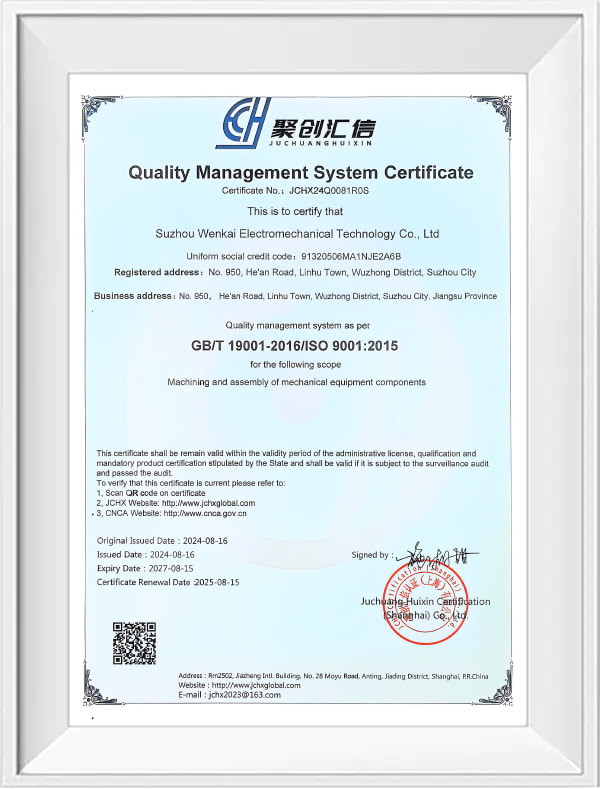
Suzhou Miaocheng Precision Machinery Co., Ltd. is ISO 9001:2015 certified and operates closed-loop quality control from incoming raw material verification to in-process checks and final outgoing inspection. For automation equipment accessories, this is particularly important because a single out-of-tolerance bore, thread or mounting hole can stop an entire assembly line.
Beyond measurement, we provide engineering feedback during the quotation and sampling stages. If a datum is ambiguous, a tolerance seems inconsistent with the assembly function, or a surface finish requirement needs a different machining strategy, we raise it before production rather than after. Our goal is to align the drawing, the inspection method and the actual operating condition of the component before the first batch runs.
Information We Use to Prepare Your Quotation
To assess feasibility, machining cost and inspection requirements, we need the project inputs that define the component as an engineered part. The more complete the technical package, the more accurate the proposal and process plan.
| Project input | How we use it |
|---|---|
| 2D drawing with dimensions, tolerances and GD&T | Machine routing, tool selection, inspection plan, datum strategy |
| 3D model, sample part, or reference assembly | Contour verification, fixture design, interface fit review |
| Material grade and raw material specification | Material procurement, machining parameters, surface-treatment compatibility |
| Quantity, batch size or annual demand | Process planning, fixture investment, per-piece cost structure |
| Critical dimensions and functional requirements | CMM programming, grinding decisions, in-process control points |
| Surface treatment, cleanliness or assembly scope | Secondary operations, washing, packaging and module-assembly support |
If the application involves pressure, temperature, media exposure or cyclic loading, include those operating conditions as well. They help us confirm material behaviour and recommend any necessary tolerance or finish adjustments before production begins.
Frequently Asked Questions
What kind of components do you supply under Automation Equipment Accessories?
We machine custom non-standard parts for automated equipment, including precision pneumatic control valve bodies, fluid control components, housings, covers, brackets, mounting plates, shafts, guide pins, bushings, sleeves, spacers, threaded connectors and fixture parts. Each part is produced to the customer drawing or sample and integrated into the machine's structural, motion or fluid-control function.
Can you combine precision machining with module assembly?
Yes. We specialize in precision component processing and module assembly. For automation accessories, this means we can deliver a valve body with fittings installed, a sensor mount with pressed components, or a subassembly with matched spacers and shafts, reducing the number of interfaces you need to coordinate at line installation.
How is precision controlled for automation equipment components?
Precision is defined by the drawing. We use 3 CMMs, precision height gauges and video measuring machines as part of a full-process inspection system. For ultra-high precision tolerance machining, we confirm the tolerance range, datum scheme and measurement method with you before production starts.
What materials do you normally machine for automation accessories?
Common choices include aluminium alloys for lightweight structures, stainless steels for corrosive or clean environments, alloy steels for shafts and wear components, and copper or brass for electrical and fluid applications. If your drawing specifies a particular grade, we quote and machine to that specified material.
What should we include in an Automation Equipment Accessories inquiry?
Send a 2D drawing with tolerances, a 3D model if available, material grade, quantity or annual demand, surface treatment and any assembly requirements. If you only have a sample, we can evaluate custom machining from drawings/samples and confirm the measurement points needed for a reliable quote.
Related Products and Categories
Our portfolio also includes Precision Fluid Control Component for applications with different operating ranges, interfaces or integration requirements.



